The phenomenon of "genetic awakening" in Golden Retrievers has long fascinated dog behaviorists and pet owners alike. Among the breed's most endearing - and sometimes puzzling - traits is their instinctive shoe-fetching behavior, which seems to emerge spontaneously in domestic settings. Recent observations suggest these retrievals aren't random acts of canine mischief, but rather deeply ingrained responses triggered by specific household scenarios that activate their ancestral retrieving instincts.
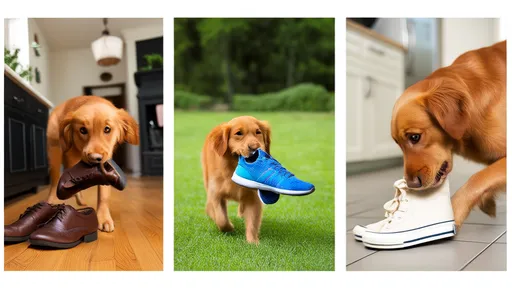
In living rooms across the world, a peculiar scene unfolds daily: a Golden Retriever proudly presenting its owner with a slipper or sneaker, tail wagging with evident satisfaction. This behavior, often dismissed as simple playfulness, actually represents what researchers now call "threshold moments" - instances when the dog's genetic programming overrides its trained domesticity. The first notable trigger occurs during what animal psychologists term "the homecoming ritual." When family members return after an absence, the dog's combination of excitement and leftover guarding instincts creates a perfect storm for shoe retrieval. The footwear serves as both greeting gift and territorial reaffirmation, harking back to when retrievers would present game to returning hunters.
Another powerful trigger emerges from the canine interpretation of human distress signals. Owners report their Goldens suddenly fetching shoes when someone in the household appears upset, stressed, or physically uncomfortable. The dogs seem to identify footwear as important human possessions (we do, after all, select them carefully and wear them constantly) and bring them as comfort objects. This behavior mirrors how wild canids might carry food back to pack members, and suggests Goldens have evolved to read human emotional states with remarkable sensitivity. Veterinary behaviorist Dr. Ellen Pressner notes, "What owners perceive as quirky behavior actually demonstrates sophisticated cross-species emotional intelligence - the dog recognizes distress and offers what it considers a valuable resource."
The third significant scenario involves what researchers call "activity vacuum" situations. Golden Retrievers bred as working dogs thrive on purposeful action. In modern homes devoid of hunting expeditions, the sight of scattered shoes creates an irresistible opportunity for "productive" work. When household activity lulls - perhaps during evening television time or when family members are absorbed in devices - the dog's innate drive to be useful manifests in carefully collecting footwear. This explains why some Goldens don't just grab shoes randomly, but systematically gather pairs and arrange them neatly, demonstrating the same methodical approach their ancestors used when retrieving downed birds.
These instinctual behaviors reveal fascinating aspects of canine cognition. The shoe retrieval isn't merely play or attention-seeking, but represents how deeply breeding persists across generations. Contemporary Golden Retrievers, removed from their original working contexts by over a century, still exhibit these precise behavioral patterns when environmental conditions mirror elements of their historical purpose. The triggers all share common threads: they occur during transitions between household states (calm to active, present to absent), involve elements of human-canine bonding, and allow the dog to fulfill its bred purpose of serving as a helpful companion.
Understanding these triggers helps owners reframe what might otherwise seem like problematic behavior. Rather than discouraging the shoe-fetching entirely, experts suggest channeling the instinct productively. Keeping special "dog shoes" for retrieval games or establishing formal fetching rituals with designated objects can satisfy the genetic imperative while saving household footwear. The key lies in recognizing that for Golden Retrievers, presenting shoes isn't misbehavior - it's the manifestation of centuries of careful breeding suddenly sparking to life in domestic settings. As we better understand these genetic awakenings, we gain deeper appreciation for how our canine companions perceive and interact with our shared world.

By /Jun 12, 2025

By /Jun 12, 2025

By /Jun 12, 2025

By /Jun 12, 2025

By /Jun 12, 2025

By /Jun 12, 2025

By /Jun 12, 2025

By /Jun 12, 2025

By /Jun 12, 2025

By /Jun 12, 2025

By /Jun 12, 2025
By /Jun 12, 2025

By /Jun 12, 2025

By /Jun 12, 2025

By /Jun 12, 2025

By /Jun 12, 2025

By /Jun 12, 2025

By /Jun 12, 2025

By /Jun 12, 2025