Top Breeds for Multi-Pet Households: Observations on Low Jealousy and Toy-Sharing Behavior

Jun 12, 2025 By

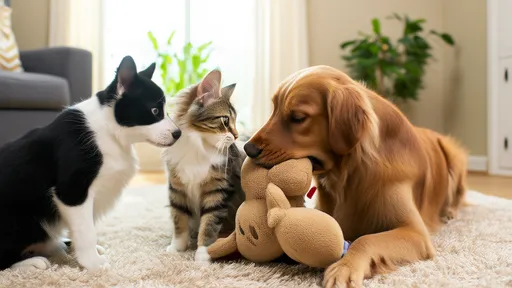
In multi-pet households, the dynamics between animals can be as complex as they are fascinating. One of the most intriguing aspects is how dogs interact with each other when it comes to resources, particularly toys. While some breeds are known for their territorial tendencies, others exhibit remarkably low jealousy and a willingness to share. Understanding these behavioral differences can help pet owners create a more harmonious living environment.

The Science Behind Canine Jealousy

Recent studies in animal behavior have shed light on the emotional capacity of dogs, particularly when it comes to jealousy. Unlike what was once believed, dogs do experience forms of jealousy, though the intensity varies significantly between breeds. Researchers have observed that certain breeds are more prone to guarding behaviors, while others show little concern when another dog approaches their toys or even their favorite human. This distinction is crucial for multi-pet households, where competition over resources can lead to tension.

Observations in controlled environments reveal that breeds like Golden Retrievers and Labrador Retrievers often display low levels of resource guarding. These dogs are more likely to engage in shared play, passing toys back and forth without signs of distress. On the other hand, breeds with stronger guarding instincts, such as Terriers or some herding dogs, may require more careful management to prevent conflicts.

Why Some Dogs Are More Willing to Share

The willingness to share toys isn’t just about temperament—it’s also influenced by early socialization and breeding history. Dogs bred for cooperative work, such as retrievers or spaniels, often exhibit behaviors that align with their historical roles. Retrievers, for instance, were developed to bring back game without damaging it, a task that requires patience and a lack of possessiveness. This trait translates well into multi-pet homes, where these dogs are less likely to see toys as exclusive possessions.

Socialization plays an equally important role. Puppies exposed to shared environments early in life—whether with littermates or other pets—tend to develop better coping mechanisms for sharing. They learn that toys are transient objects, not worth guarding aggressively. This early conditioning can make a significant difference in how adult dogs interact with their furry housemates.

Breeds That Excel in Multi-Pet Settings

While individual personalities vary, certain breeds consistently rank high in compatibility for multi-pet households. The Cavalier King Charles Spaniel, for example, is renowned for its gentle and sociable nature. These dogs rarely show jealousy, preferring companionship over competition. Similarly, the Basset Hound, with its laid-back demeanor, is another excellent candidate for homes with multiple pets. Their low-energy approach to life often means they’re content to let others take the lead in play.

Another standout is the Beagle. Originally bred to hunt in packs, Beagles have a strong inclination toward social harmony. They’re less likely to engage in possessive behavior over toys, though their curiosity can sometimes lead them to "borrow" items from other pets without malice. This makes them well-suited for lively households where toys frequently change paws.

Managing Toy Sharing in Mixed-Breed Homes

Even in homes with breeds predisposed to sharing, conflicts can arise. Smart management strategies can help mitigate these issues. One effective approach is to provide an abundance of toys, ensuring no single item becomes a point of contention. Rotating toys can also keep them fresh and exciting, reducing the likelihood of possessive behavior.

Another key factor is supervision during playtime. While some dogs naturally share well, others may need gentle redirection. Positive reinforcement—rewarding dogs when they willingly give up a toy—can reinforce good behavior over time. It’s also helpful to recognize early signs of tension, such as stiff body language or prolonged staring, and intervene before a dispute escalates.

The Role of Human Interaction

Interestingly, human behavior plays a significant role in how dogs perceive sharing. Dogs are highly attuned to their owners’ reactions, and if a person inadvertently reinforces jealousy—such as by giving attention to a dog that’s guarding a toy—it can exacerbate the behavior. Consistency is key. By rewarding calm, shared play and avoiding favoritism, owners can foster a more cooperative environment.

Training sessions that involve multiple dogs can also be beneficial. Teaching commands like "leave it" or "drop it" in a group setting helps dogs understand that relinquishing a toy doesn’t mean losing it forever. Over time, this builds trust between pets and reduces anxiety around shared resources.

When to Seek Professional Guidance

While many dogs adapt well to sharing, some may struggle due to past trauma or ingrained instincts. In such cases, consulting a professional dog behaviorist can provide tailored solutions. Techniques like desensitization or counter-conditioning can help dogs associate the presence of other pets with positive outcomes rather than competition.

It’s also important to recognize that not all conflicts stem from jealousy. Sometimes, what appears to be toy guarding is actually a miscommunication between pets. A behaviorist can help decipher these interactions and recommend specific strategies to improve harmony.

Final Thoughts

Choosing a dog breed with low jealousy tendencies and a propensity for sharing can make life in a multi-pet household significantly smoother. However, breed tendencies are just one piece of the puzzle. Early socialization, thoughtful management, and consistent training all contribute to a peaceful coexistence. By understanding and working with their dogs’ natural behaviors, owners can create a home where every pet feels secure—and every toy is fair game.
Recommend Posts
Pet

Basset Hound's Mud Mania: The Chemical Communication Covering Behavior of Tracking Dogs in Water

By /Jun 12, 2025

The Basset Hound’s peculiar obsession with rolling in mud and water has long baffled owners and amused onlookers. These low-slung, floppy-eared scent hounds seem to possess an almost magnetic attraction to murky puddles and damp earth, often emerging coated in a thick layer of grime with what can only be described as canine triumph. But what drives this behavior? Recent research suggests it’s far more than simple playfulness—it’s a sophisticated chemical communication strategy hardwired into their DNA.
Pet

Alaskan Malamute Air Conditioning Dependence: Heat Stress Response of -30°C Genes in a 25°C Environment

By /Jun 12, 2025

For centuries, the Alaskan Malamute has been synonymous with endurance in frigid climates. Bred by the indigenous Mahlemut people to haul heavy freight across Arctic terrains, these dogs possess genetic adaptations that make them masters of subzero survival. Yet, as climate change accelerates and urban living becomes more common, a paradoxical challenge emerges: how does a -30°C genome cope when exposed to 25°C environments? The answer lies in their escalating dependence on human-provided climate control—and the physiological toll it takes when unavailable.
Pet

Chinese Crested's Skin Socializing: The Special Need for Emotional Contact Through Temperature Transmission

By /Jun 12, 2025

In the world of canine companionship, few breeds spark as much curiosity as the Chinese Crested Dog. With their hairless bodies and delicate skin, these unique creatures have developed an extraordinary method of communication that goes beyond barks and tail wags. Their social interactions revolve around an intricate language of touch and temperature exchange, creating bonds that challenge our traditional understanding of dog behavior.
Pet

Alliance Behavior of Rhodesian Ridgebacks: Testing Leadership in Domestic Multi-Dog Groups

By /Jun 12, 2025

The Rhodesian Ridgeback, a breed renowned for its strength, intelligence, and loyalty, has long been a subject of fascination for dog behaviorists. Recent studies have delved into the complex social dynamics of these dogs, particularly their coalition-building behaviors and leadership tendencies within multi-dog households. Understanding how these dogs establish hierarchies and form alliances offers valuable insights into canine social structures and their implications for pet owners.
Pet

Whippet's Social Distance: The Body Language of a Noble Breed Keeping a 1-Meter Interval

By /Jun 12, 2025

The Whippet, often referred to as the "poor man's racehorse," carries itself with an air of aristocratic elegance that belies its humble origins. Among sighthounds, this slender yet muscular breed is unique not just for its lightning speed but for its distinct approach to social interaction. Unlike many dogs that thrive on constant physical contact, the Whippet maintains what can only be described as a regal personal space bubble—typically about one meter in radius. This invisible boundary isn't born of aloofness, but rather a sophisticated language of posture and movement that demands careful interpretation.
Pet

American Bully Saliva Alert: Risk Level of Aspiration Due to Oral Structural Defects

By /Jun 12, 2025

The American Bully, with its muscular build and affectionate demeanor, has surged in popularity among dog enthusiasts. However, beneath their confident exterior lies a health concern that often goes unnoticed—excessive drooling linked to oral structure defects. This seemingly benign trait may signal deeper anatomical issues that predispose these dogs to life-threatening aspiration risks. Understanding this connection requires peeling back layers of breed-specific physiology and confronting uncomfortable truths about how selective breeding has reshaped canine bodies.
Pet

Pharaoh Hound's 'Blush' Phenomenon: Excitement-Inducing Pink Ears as an Emotional Visual Indicator"

By /Jun 12, 2025

The Pharaoh Hound, an ancient breed revered for its grace and hunting prowess, possesses a peculiar trait that has fascinated dog enthusiasts and scientists alike: the ability to "blush." When excited or happy, these dogs exhibit a striking physiological response—their normally pale ears turn a vivid shade of pink. This phenomenon, often referred to as "ear flushing," serves as a unique emotional indicator, offering a rare glimpse into the inner world of canine emotions.
Pet

The Yorkie's Mysterious Aggression Towards Larger Dogs: A Defense Mechanism Triggered by Misjudgment of Size

By /Jun 12, 2025

The Yorkshire Terrier, affectionately known as the Yorkie, is one of the smallest dog breeds in the world, often weighing no more than seven pounds. Despite its tiny stature, this breed has gained a reputation for its fearless—and sometimes aggressive—behavior toward much larger dogs. This puzzling phenomenon has left many dog owners and animal behaviorists scratching their heads. Why would a dog so small willingly confront a canine ten times its size? The answer may lie in a fascinating combination of evolutionary instincts, misjudged threats, and defensive communication strategies.
Pet

Afghan Hound Head-Shaking Mechanics: The Aerodynamics of Long Hair in Scent Diffusion

By /Jun 12, 2025

The Afghan Hound, with its regal posture and flowing silken coat, has long been admired for its elegance and hunting prowess. Recent studies have begun to unravel the fascinating interplay between the breed's distinctive head movements and the aerodynamic properties of its long hair during scent dispersal. This phenomenon presents a unique case study in biomechanics, where canine anatomy meets fluid dynamics in unexpected ways.
Pet

Duration of Suckling Behavior in Adult Maltese Dogs as a Continuation of Pre-weaning Psychology

By /Jun 12, 2025

The phenomenon of "kneading" or "making biscuits" in adult Maltese dogs has long fascinated both pet owners and animal behaviorists. This behavior, commonly associated with nursing in puppies, often persists into adulthood, raising questions about its psychological underpinnings and duration. While most dogs outgrow this habit after weaning, a significant percentage of Maltese continue to exhibit kneading behaviors throughout their lives, suggesting a unique psychological profile in this breed.
Pet

Schnauzer Beard Function Revealed: Humidity Detector Triggers Refusal to Eat Moist Dog Food

By /Jun 12, 2025

In the world of canine quirks, few things puzzle owners more than their schnauzer's sudden refusal to eat moist dog food. What appears to be mere pickiness might actually stem from an extraordinary biological feature – those iconic wiry whiskers functioning as sophisticated humidity detectors.
Pet

Golden Retriever Gene Activation Test: 3 Home Scenarios That Trigger Shoe-Fetching Behavior

By /Jun 12, 2025

The phenomenon of "genetic awakening" in Golden Retrievers has long fascinated dog behaviorists and pet owners alike. Among the breed's most endearing - and sometimes puzzling - traits is their instinctive shoe-fetching behavior, which seems to emerge spontaneously in domestic settings. Recent observations suggest these retrievals aren't random acts of canine mischief, but rather deeply ingrained responses triggered by specific household scenarios that activate their ancestral retrieving instincts.
Pet

Top Breeds for Multi-Pet Households: Observations on Low Jealousy and Toy-Sharing Behavior

By /Jun 12, 2025

In multi-pet households, the dynamics between animals can be as complex as they are fascinating. One of the most intriguing aspects is how dogs interact with each other when it comes to resources, particularly toys. While some breeds are known for their territorial tendencies, others exhibit remarkably low jealousy and a willingness to share. Understanding these behavioral differences can help pet owners create a more harmonious living environment.
Pet

Apartment Breeding Alert: Ranking of Dog Breeds with High Sound Sensitivity

By /Jun 12, 2025

Living in an apartment comes with its own set of challenges, especially when it comes to noise sensitivity. For dog owners, choosing the right breed is crucial to maintaining harmony with neighbors and avoiding potential conflicts. Some dogs are naturally more vocal than others, and their tendency to bark can become a significant issue in close-quarters living. Understanding which breeds are more prone to excessive barking can help prospective pet owners make informed decisions before bringing a furry friend into their apartment.
Pet

The Silent Attack of Akita Inu: Historical Guard Function Residue in Silent Biting Behavior

By /Jun 12, 2025

The Akita Inu, a breed revered for its dignified presence and unwavering loyalty, carries within its DNA a behavioral relic that both fascinates and unsettles dog enthusiasts: the silent attack. Unlike typical canine aggression marked by growls or barks, the Akita’s "mute bite" is a sudden, wordless lunge—a throwback to its historical role as a guardian of Japanese nobility. This phenomenon isn’t mere unpredictability; it’s a whisper from the past, a tactical adaptation preserved through centuries of selective breeding.
Pet

The Social Adaptability and Evolutionary Advantages of Chinese Rural Dogs' Perception and Interpretation of Human Behavior

By /Jun 12, 2025

The Chinese rural dog, often referred to as the "native dog" or "village dog," has long been a fixture of countryside life in China. Unlike their purebred counterparts, these dogs have evolved through natural selection rather than human-directed breeding. One of their most remarkable traits is their ability to "read" human emotions and social cues—a skill that has granted them unparalleled adaptability in both rural and urban environments. This behavioral flexibility isn’t just a quirk; it’s a survival strategy honed over centuries of coexistence with humans.
Pet

Great Dane's Limb Misjudgment: Intimidating" Play Postures Caused by Huge Size

By /Jun 12, 2025

The sight of a Great Dane bounding toward you with unbridled enthusiasm can be enough to make even the most ardent dog lover take a step back. These gentle giants, often weighing over 150 pounds and standing taller than some humans when on their hind legs, possess a physicality that can be easily misread. What owners know to be playful exuberance often reads as aggression or intimidation to strangers—or even to other dogs. This phenomenon, which we might call "intimidation by anatomy," creates unique challenges for Great Dane owners and underscores how profoundly body language is shaped by scale.
Pet

The Shy Gene" in Shetland Sheepdogs: A Domestication Defect in Stranger Avoidance Behavior

By /Jun 12, 2025

The Shetland Sheepdog, with its striking resemblance to a miniature Rough Collie, has long been celebrated for its intelligence, agility, and unwavering loyalty. Yet beneath this breed's poised exterior lies a curious behavioral paradox that has puzzled canine researchers for decades: an inherited predisposition toward stranger avoidance often mislabeled as "shyness." This phenomenon, now understood as a byproduct of selective breeding, reveals uncomfortable truths about how human preferences shape canine neurobiology.
Pet

Samoyed's Preference for Soft Objects: Psychological Compensation for Prolonged Oral Stage in Sled Dogs

By /Jun 12, 2025

The sight of a fluffy Samoyed gleefully disemboweling a couch cushion or reducing a throw pillow to snowdrifts of fluff might elicit equal parts amusement and exasperation. Behind those trademark "Sammy smiles" and innocent eyes lies a breed-specific compulsion that puzzles many owners: the systematic destruction of soft household items. This behavior, far from random mischief, reveals a fascinating intersection of canine psychology and evolutionary adaptation in Arctic working dogs.