Spain's Housing Crisis: The Battle Between Tourism and Livability

Jun 4, 2025 By Samuel Cooper

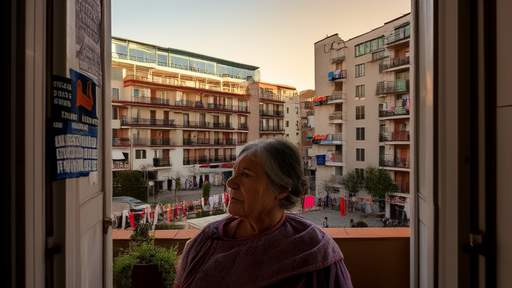
Spain, with its enviable climate, delectable cuisine, and stunning architecture, has long been a magnet for travelers. In 2024, it welcomed a staggering 98 million visitors, making it the world’s second most-visited country after France. However, this surge in tourism has brought with it an unenviable side effect: a severe housing rental crisis in Spain’s main urban centers. Cities like Madrid, Barcelona, and Valencia are now grappling with skyrocketing rents and a shortage of affordable housing, issues that have become a primary concern for Spaniards, according to the Spanish Center for Sociological Research.


The root of this crisis can be traced back to the rapid expansion of short-term rental platforms like Airbnb. While these platforms have revolutionized travel by offering tourists a more immersive experience, they have also exacerbated housing shortages by converting a significant portion of the rental market into tourist accommodations. This shift has left many locals struggling to find affordable places to live.


Earlier this month, Spain’s Social Rights, Consumer Affairs, and 2030 Agenda Ministry took a bold step by demanding the removal of nearly 66,000 property rental listings on Airbnb. The ministry argued that these listings contravene tourist accommodation regulations, a move that has been met with both relief and resistance. Airbnb is appealing the decision, but for many Spaniards, the crisis has already taken a significant toll on their quality of life.


Enrico Congiu, a 40-year-old family doctor living in Madrid, shared his frustration. "Not being able to afford the purchase or even just the rent of a decent apartment for oneself is devastating for the dignity of working people," he said. Congiu currently shares an apartment with two other people his age, close to the capital’s downtown. His situation is far from unique. Across Spain, many young professionals like Raquel Pérez, a 41-year-old from Barcelona, feel trapped by the housing shortage. "Currently, it is almost impossible to rent an apartment in Barcelona," she said. "We Barcelonans find ourselves having to share an apartment at the age of 40, or having to move to neighboring cities."


The data supports their concerns. According to Idealista, a real estate website, the price per square meter of house rentals has risen a staggering 85% nationwide in Spain over the last decade. Tourism and seasonal rentals are seen as key drivers of this inflation. With 400,000 tourist-use housing units in the country, according to the Spanish Statistical Office, and a housing deficit estimated by the Bank of Spain to be between 400,000 and 450,000 dwellings, the government has been spurred into action.


Pablo Bustinduy, Spain’s minister for social rights, consumer affairs, and the 2030 agenda, emphasized the human cost of the crisis. "Behind each of the 65,000 property listings there used to be homes for families, workers, students, who today are expelled from their neighborhoods and see how their cities are turned into theme parks for the excessive profit of a few investment funds and big companies," he said. Most of the targeted listings violated existing rules by not providing a license number, providing a wrong one, or not indicating the legal nature of the owner.


The Spanish government is not alone in its efforts. Madrid’s High Court has ordered Airbnb to immediately withdraw 5,800 property rental listings identified by the ministry, located in regions like Andalucia, Madrid, Catalonia, Valencia, the Balearic Islands, and the Basque Country. Airbnb, however, maintains that it will continue to appeal all decisions affecting this case. The platform accused the ministry of "using an indiscriminate methodology" to single out rental properties that Airbnb says do not actually need a license. Airbnb also highlighted its cooperation with the governments of the Canary Islands, Murcia, and Ibiza to pursue illegal listings.


Local authorities are also taking matters into their own hands. In June 2024, Barcelona City Council announced that it will not renew housing licenses for tourist apartments after 2028. This means that more than 10,000 tourist apartments will have to be made available for locals to rent or purchase. However, this move has upset some property owners, with the Association of Tourist Apartments of Barcelona demanding more than $4.4 million as compensation for about 7,200 apartments affected by this measure.


Not everyone is convinced that these measures will tip the balance in favor of those struggling to find long-term accommodation. Xavier Solé, a Barcelona resident, argued that "more affordable housing and better regulation would be needed." Some tourists, meanwhile, say they agree with a clampdown on Airbnb-style rentals, even if they find them a preferable option. Lara Sorbili, who recently visited Madrid from Buenos Aires, expressed her support for efforts to reduce rental prices for locals, while still choosing Airbnb for its convenience and cost-effectiveness for family trips. Deborah Murphy, who flew from Ireland to spend time in the Spanish capital, added that new measures were "probably for the best," noting that the abundance of hotels already available should not come at the expense of housing for locals.


The housing crisis in Spain is a complex issue with no easy solutions. While the government and local authorities are taking steps to address the problem, the path forward will require a delicate balance between regulating the tourism industry and ensuring that locals have access to affordable housing. The recent measures targeting short-term rentals are a significant step, but they are only part of a broader strategy that must include increasing the supply of affordable housing, improving regulation, and fostering a more sustainable approach to tourism.


As Spain navigates this challenging terrain, the voices of its residents, like Enrico Congiu and Raquel Pérez, must be at the forefront of the conversation. Their experiences highlight the human cost of the housing crisis and underscore the urgency of finding a solution that prioritizes the well-being of the people who call Spain home. The future of Spain’s cities depends on it, and as the world watches, the outcome will serve as a critical lesson in the delicate balance between tourism and livability.


Recommend Posts
Travel

Camping in France: A Journey Through Nature and Luxury

By William Miller/Jun 4, 2025

Camping trips in France were a large part of my childhood. My dad would bemoan having to wear Speedos over “normal” swimming shorts in the campsite swimming pool; Mum would read the paper road map wrong, taking us on a convoluted detour; and I’d make a bunch of new French friends I couldn’t communicate with. Despite the occasional mishap, these trips were filled with unforgettable moments and a deep connection to nature.
Travel

Discovering Extremadura: Spain's Hidden Gem

By Christopher Harris/Jun 4, 2025

Nestled in the western part of Spain, Extremadura is a region often overshadowed by its more popular neighbors. Yet, it offers a tranquil getaway that goes beyond the typical tourist trail. With its rich history, stunning landscapes, and vibrant culture, Extremadura is a destination that deserves to be explored. From ancient Roman ruins to Michelin-starred dining, this region has something for everyone.
Travel

A Journey Through the Dolomites: Where Nature and Culture Converge

By Samuel Cooper/Jun 4, 2025

The Dolomites, with their jagged pinnacles, saw-toothed peaks, and bare rock walls, offer some of the most dramatic scenery in alpine Europe. A UNESCO World Heritage Site, these limestone formations were once coral reefs, transformed into mountains when the African and European tectonic plates collided 250 million years ago. The result is a stunning patchwork of vertical rock and rolling meadows dotted with alpine lakes, medieval castles, and charming mountain villages.
Travel

In the Shadow of the Eiger: A Personal Journey

By Sophia Lewis/Jun 4, 2025

A few years ago, my dad told me about a mountain where I could easily sense another world. "There is a special air and light," he had said, vaguely. "You just have to walk close to it to feel and see it. Stand in one place and just look up." The mountain on my dad’s mind that day was the Eiger, Switzerland’s 3,970-metre ogre of limestone and ice. Like few others, the peak exerts a gravitational pull on climbers and remains the chief symbol of the Bernese Oberland. Its most notable feature, the 1,800-metre north face, is the largest in the Alps. This gigantic slab looms over the village of Grindelwald, appearing at sunrise as an immense black spectre in a valley of green.
Travel

The Allure of Onsen: A Journey into Japan's Hot Spring Culture

By Eric Ward/Jun 4, 2025

Japan, a land of rich traditions and natural beauty, offers one of the most unique and rejuvenating experiences for travelers: the onsen. An onsen is a traditional Japanese hot spring, fueled by geothermal activity beneath the Earth's surface. These baths, found all over Japan due to the country's volcanic activity, are filled with naturally heated, mineral-rich water. They are not just places to bathe but are deeply embedded in Japanese culture, offering a blend of relaxation, health benefits, and communal bonding.
Travel

The Price of Preservation: Protecting Natural and Cultural Treasures from Well-Meaning Damage

By Amanda Phillips/Jun 4, 2025

In the realm of travel and tourism, the desire to leave a mark or take a memento from a beloved destination is a common impulse. However, this seemingly harmless behavior can have significant and unintended consequences for the very places we cherish. Two recent cases highlight the delicate balance between celebrating our connection to these sites and ensuring their preservation for future generations: the Giant’s Causeway in Northern Ireland and the medieval streets of Bruges, Belgium.
Travel

Mount Etna's Mighty Roar: Tourists Flee as Volcano Erupts in Spectacular Display

By Samuel Cooper/Jun 4, 2025

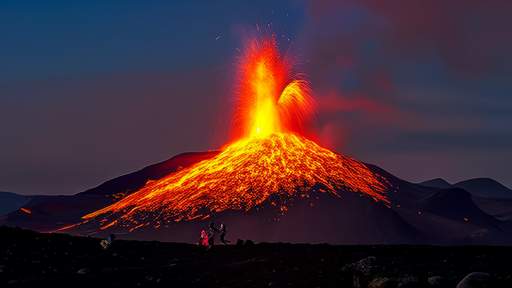
On a seemingly ordinary Monday, the tranquility of Sicily was shattered by the earth-shaking fury of Mount Etna, one of the world’s most active and awe-inspiring volcanoes. A massive eruption sent tourists scrambling down the slopes in a hurried retreat, as a towering plume of scorching gases, ash, and rock billowed several kilometers into the sky. The eruption, which began overnight, produced explosions so powerful that they were heard as far away as Taormina and Catania, cities located approximately 50 and 40 kilometers (31 and 25 miles) from the volcano, respectively.
Travel

Canada's Warm Embrace Amidst Tensions: A Message to American Travelers

By Natalie Campbell/Jun 4, 2025

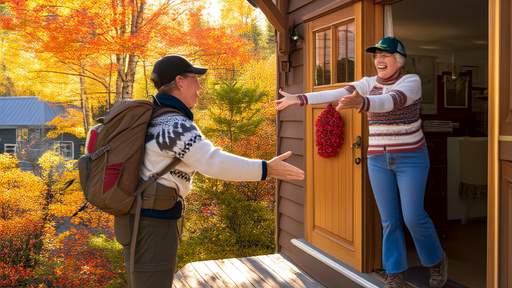
In the picturesque Eastern Townships of southern Quebec, where rolling hills and vineyards paint a serene landscape, a heartfelt message is being sent to American travelers: you are more than welcome here. On May 26, the region’s tourist board released a promotional video that has captured the attention of many. The video features an English-speaking tourist who hesitantly admits to being American, only to receive a warm hug from a French-speaking hotel receptionist. This simple yet powerful gesture is part of a CA$150,000 (US$109,000) ad campaign timed perfectly for the start of the summer travel season, aimed at reassuring US vacationers that they are not only expected but truly embraced.
Travel

Spain's Housing Crisis: The Battle Between Tourism and Livability

By Samuel Cooper/Jun 4, 2025

Spain, with its enviable climate, delectable cuisine, and stunning architecture, has long been a magnet for travelers. In 2024, it welcomed a staggering 98 million visitors, making it the world’s second most-visited country after France. However, this surge in tourism has brought with it an unenviable side effect: a severe housing rental crisis in Spain’s main urban centers. Cities like Madrid, Barcelona, and Valencia are now grappling with skyrocketing rents and a shortage of affordable housing, issues that have become a primary concern for Spaniards, according to the Spanish Center for Sociological Research.
Travel

Athens Under Siege: The Battle Against Heat and the Future of Tourism

By Grace Cox/Jun 4, 2025

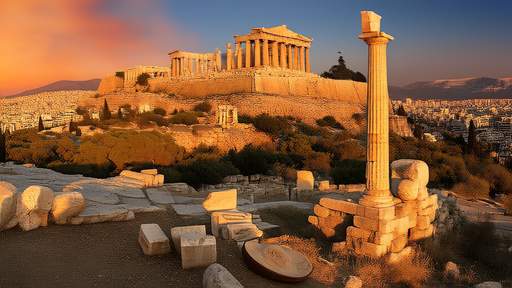
Climbing to the top of the Acropolis of Athens, the birthplace of democracy, has always been a feat for the brave. Never more so, perhaps, than in recent summers when the city has sweated through long and perilous heatwaves. In the past two years, during peak tourism season, relentless heat has repeatedly forced authorities to shut Greece’s most-visited site during the hottest hours of the day to protect visitors and staff from temperatures exceeding 40 Celsius (104 Fahrenheit). The UNESCO World Heritage site has little shade. Standing among the exquisitely-crafted white marble columns of the Parthenon as they reflect the fierce Mediterranean sun can feel more like an endurance test than the fulfillment of a childhood dream — especially when the smoke from out-of-control wildfires drifts across the horizon.
Travel

The Hidden Cost of Flying Solo: A New Frontier in Air Travel Pricing

By David Anderson/Jun 4, 2025

Traveling alone has long been a rite of passage for many adventurers, offering the freedom to explore at one's own pace and the opportunity for self-discovery. However, solo travelers have historically faced a significant financial hurdle: the dreaded "single supplement" often imposed by tour operators. This additional fee, meant to cover the costs of unused space, has long been a source of frustration for those who prefer to journey solo. Surprisingly, this practice now appears to be extending to the skies, with major US airlines reportedly charging higher fares for solo flyers on certain domestic routes. This revelation has sparked a debate about fairness, transparency, and the future of air travel pricing.
Travel

The Castro: A Legacy of Pride and Progress

By Jessica Lee/Jun 4, 2025

In the tapestry of American history, few neighborhoods have woven themselves as indelibly into the cultural fabric as San Francisco's Castro District. Once a quiet enclave known as Eureka Valley or Little Scandinavia, the Castro has transformed over the decades into a global beacon for the LGBTQ+ community. It is a place where identity finds expression, where activism ignites change, and where the spirit of inclusivity thrives. From its humble beginnings to its current status as a symbol of queer culture, the Castro's journey is a testament to the power of community and resilience.
Travel

The Golden Summer of Last-Minute Travel Deals: A Procrastinator's Paradise

By Emma Thompson/Jun 4, 2025

For many, the thrill of summer travel is often overshadowed by the anxiety of booking flights. The fear of missing out on the perfect deal or being stuck with exorbitant prices can turn the planning process into a stressful ordeal. However, this year, the tables have turned in favor of the procrastinators. If you're still contemplating whether to press the "purchase" button for your summer vacation, fear not. This summer is shaping up to be a unique opportunity for those who prefer to plan at the eleventh hour.
Travel

The Enigma of Japan's Trash Cans: A Tale of Culture, Cleanliness, and Caution

By Grace Cox/Jun 4, 2025

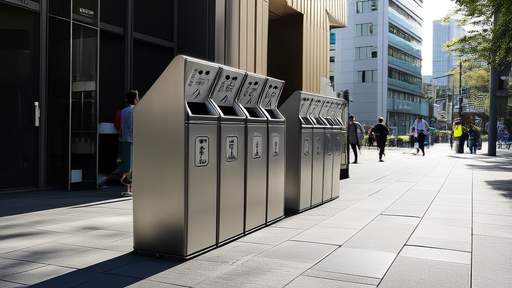
In the bustling streets of Tokyo, where neon lights flicker and ancient traditions blend seamlessly with modernity, one might expect to find the usual urban clutter: discarded wrappers, overflowing trash cans, and the general detritus of daily life. Yet, Japan stands as a remarkable anomaly in this regard. Its cities are almost eerily clean, with streets that gleam and public spaces that are virtually free of litter. But herein lies a paradox: despite its reputation for impeccable cleanliness, Japan is surprisingly devoid of public trash cans. This peculiar phenomenon has left many visitors, particularly Western travelers, scratching their heads in confusion.