The Castro: A Legacy of Pride and Progress

Jun 4, 2025 By Jessica Lee

In the tapestry of American history, few neighborhoods have woven themselves as indelibly into the cultural fabric as San Francisco's Castro District. Once a quiet enclave known as Eureka Valley or Little Scandinavia, the Castro has transformed over the decades into a global beacon for the LGBTQ+ community. It is a place where identity finds expression, where activism ignites change, and where the spirit of inclusivity thrives. From its humble beginnings to its current status as a symbol of queer culture, the Castro's journey is a testament to the power of community and resilience.


In the mid-20th century, the Castro was a neighborhood like many others in San Francisco, characterized by its working-class roots and immigrant heritage. However, the winds of change began to blow in the 1960s, a decade defined by its social upheaval and countercultural movements. As young people flocked to San Francisco to protest against US involvement in the Vietnam War and embrace the burgeoning hippie movement, the Castro emerged as a sanctuary for those seeking acceptance and freedom. "The Castro neighborhood has been made famous for its incredible welcoming of LGBTQ people," explains Roberto Ordeñana, executive director of the GLBT Historical Society. "And I think that that built through word of mouth."


The GLBT Historical Society, founded in 1985 at the height of the AIDS epidemic, has played a pivotal role in preserving the Castro's rich history. Its mission was to collect and safeguard memorabilia and ephemera that tell the stories of the LGBTQ+ community. Today, its collection spans a diverse array of artifacts, from vintage queer zines to the original Pride flag, each piece a testament to the neighborhood's vibrant past.


At the heart of the Castro's evolution lies a figure whose name has become synonymous with the LGBTQ+ rights movement: Harvey Milk. Born in New York, Milk moved to San Francisco in 1972, opening a camera shop on Castro Street, the neighborhood's main artery. Milk's journey from small-business owner to political icon is a story of courage and determination. He became politically active, founding the Castro Village Association, one of the first predominantly LGBTQ-owned business groups in the United States. His biographer, Randy Shilts, aptly dubbed him the "Mayor of Castro Street."


In 1977, Milk made history when he was elected to San Francisco's Board of Supervisors, becoming the first openly gay male politician in the country. His tenure was marked by his tireless advocacy for LGBTQ+ rights and his role in defeating Proposition 6, a discriminatory bill that would have required schools to fire gay and lesbian teachers. Milk's impact was profound; as Timothy Stewart-Winter, associate professor of history at Rutgers University-Newark, notes, "(Milk) crystallized the political hopes and dreams of a generation of out gay people in the aftermath of the gay liberation movement."


Tragically, Milk's life was cut short less than a year after his election. Along with San Francisco Mayor George Moscone, he was assassinated by a fellow city supervisor, Dan White. Milk's murder turned him into a martyr, his legacy forever etched in the annals of history. Like John F. Kennedy and Martin Luther King Jr., Milk's untimely death froze him in the political and social turmoil of his era. His name has since become a symbol of the LGBTQ+ community, honored in various ways, including the naming of a US Navy ship and a terminal at San Francisco International Airport.


However, Ordeñana cautions against allowing Milk to overshadow the many other individuals who have contributed to the Castro's rich history. "It's important for us to celebrate Harvey Milk and all of these other individuals that have done such incredible work for our community," he says. One such figure is Sally Gearhart, a contemporary of Milk's who worked alongside him on the Proposition 6 campaign. Gearhart, a writer, teacher, and activist, founded one of the first women's studies university programs at San Francisco State University. Her contributions, though significant, have often been relegated to the margins of mainstream narratives. "We want to make sure that we are lifting up the histories of people that have been most vulnerable in our community," Ordeñana emphasizes. "That includes seniors, that includes young people, that includes women and trans people in particular."


Fifty years since Harvey Milk set up shop on Castro Street, the neighborhood has evolved in ways both expected and unforeseen. While the Castro remains a global symbol of LGBTQ+ culture, it has also become a victim of its own success. The neighborhood's popularity has led to rising costs and gentrification, challenges that reflect the broader housing affordability crisis in San Francisco. "The Castro, on the one hand, is paradigmatic; it's a place people associate with gayness. It's a place where people go to be gay, but it's also a place that is incredibly expensive, and where the contradictions of late capitalism are played out," says Stewart-Winter.


The tech industry's rapid growth has transformed San Francisco, and the Castro is no exception. Once home to mom-and-pop shops and local businesses, the neighborhood now hosts global brands like Apple and Starbucks alongside its beloved taquerias and art galleries. Despite these changes, the Castro's LGBTQ+ heritage endures. Harvey Milk's camera store, now an official city landmark, stands as a poignant reminder of the neighborhood's roots. The store, located at 575 Castro Street, features a plaque and a mural of Milk, ensuring that his legacy remains visible.


In the face of rapid gentrification, the GLBT Historical Society has taken steps to preserve the Castro's history for future generations. The organization raised funds to purchase a permanent home in the neighborhood, a move that underscores its commitment to keeping the Castro's LGBTQ+ history alive and relevant. "Obviously LGBTQ people live everywhere. We are part of every community. We are part of every neighborhood," Ordeñana notes. "The Castro continues to be a destination for people coming in from all over the world, which is why it was important for us to open this museum in the Castro that's available for global tourism and city residents alike."


The Castro's journey from a quiet neighborhood to a global symbol of LGBTQ+ pride is a story of triumph and transformation. It is a place where history is made and where legacies are honored. As Ordeñana reflects, "I was born and raised in San Francisco. I never left. I love traveling the world, but this is home." The Castro is more than just a neighborhood; it is a living testament to the power of community, a beacon of hope, and a reminder that progress is built on the foundations laid by those who came before us.


In an era where the fight for LGBTQ+ rights continues, the Castro stands as a beacon of resilience and hope. Its history is a reminder that progress is not linear but is built on the courage and determination of individuals who dared to dream of a more inclusive world. From Harvey Milk's pioneering spirit to the countless activists who have fought for equality, the Castro's legacy is one of enduring significance. As we look to the future, the Castro will remain a place where the past informs the present and where the spirit of Pride continues to thrive.


Recommend Posts
Travel

Camping in France: A Journey Through Nature and Luxury

By William Miller/Jun 4, 2025

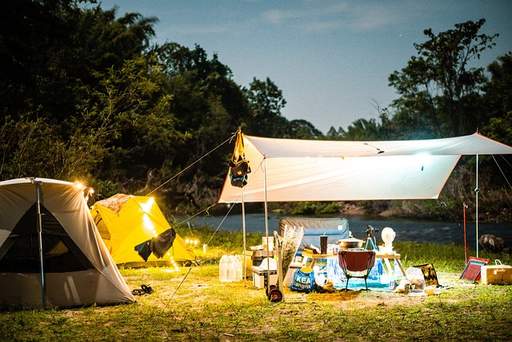
Camping trips in France were a large part of my childhood. My dad would bemoan having to wear Speedos over “normal” swimming shorts in the campsite swimming pool; Mum would read the paper road map wrong, taking us on a convoluted detour; and I’d make a bunch of new French friends I couldn’t communicate with. Despite the occasional mishap, these trips were filled with unforgettable moments and a deep connection to nature.
Travel

Discovering Extremadura: Spain's Hidden Gem

By Christopher Harris/Jun 4, 2025

Nestled in the western part of Spain, Extremadura is a region often overshadowed by its more popular neighbors. Yet, it offers a tranquil getaway that goes beyond the typical tourist trail. With its rich history, stunning landscapes, and vibrant culture, Extremadura is a destination that deserves to be explored. From ancient Roman ruins to Michelin-starred dining, this region has something for everyone.
Travel

A Journey Through the Dolomites: Where Nature and Culture Converge

By Samuel Cooper/Jun 4, 2025

The Dolomites, with their jagged pinnacles, saw-toothed peaks, and bare rock walls, offer some of the most dramatic scenery in alpine Europe. A UNESCO World Heritage Site, these limestone formations were once coral reefs, transformed into mountains when the African and European tectonic plates collided 250 million years ago. The result is a stunning patchwork of vertical rock and rolling meadows dotted with alpine lakes, medieval castles, and charming mountain villages.
Travel

In the Shadow of the Eiger: A Personal Journey

By Sophia Lewis/Jun 4, 2025

A few years ago, my dad told me about a mountain where I could easily sense another world. "There is a special air and light," he had said, vaguely. "You just have to walk close to it to feel and see it. Stand in one place and just look up." The mountain on my dad’s mind that day was the Eiger, Switzerland’s 3,970-metre ogre of limestone and ice. Like few others, the peak exerts a gravitational pull on climbers and remains the chief symbol of the Bernese Oberland. Its most notable feature, the 1,800-metre north face, is the largest in the Alps. This gigantic slab looms over the village of Grindelwald, appearing at sunrise as an immense black spectre in a valley of green.
Travel

The Allure of Onsen: A Journey into Japan's Hot Spring Culture

By Eric Ward/Jun 4, 2025

Japan, a land of rich traditions and natural beauty, offers one of the most unique and rejuvenating experiences for travelers: the onsen. An onsen is a traditional Japanese hot spring, fueled by geothermal activity beneath the Earth's surface. These baths, found all over Japan due to the country's volcanic activity, are filled with naturally heated, mineral-rich water. They are not just places to bathe but are deeply embedded in Japanese culture, offering a blend of relaxation, health benefits, and communal bonding.
Travel

The Price of Preservation: Protecting Natural and Cultural Treasures from Well-Meaning Damage

By Amanda Phillips/Jun 4, 2025

In the realm of travel and tourism, the desire to leave a mark or take a memento from a beloved destination is a common impulse. However, this seemingly harmless behavior can have significant and unintended consequences for the very places we cherish. Two recent cases highlight the delicate balance between celebrating our connection to these sites and ensuring their preservation for future generations: the Giant’s Causeway in Northern Ireland and the medieval streets of Bruges, Belgium.
Travel

Mount Etna's Mighty Roar: Tourists Flee as Volcano Erupts in Spectacular Display

By Samuel Cooper/Jun 4, 2025

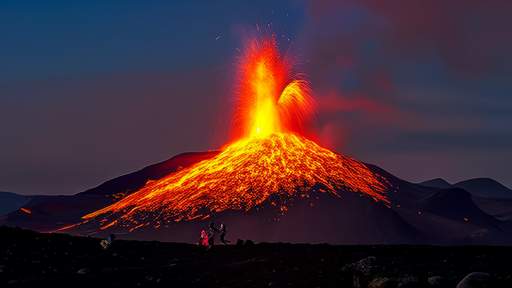
On a seemingly ordinary Monday, the tranquility of Sicily was shattered by the earth-shaking fury of Mount Etna, one of the world’s most active and awe-inspiring volcanoes. A massive eruption sent tourists scrambling down the slopes in a hurried retreat, as a towering plume of scorching gases, ash, and rock billowed several kilometers into the sky. The eruption, which began overnight, produced explosions so powerful that they were heard as far away as Taormina and Catania, cities located approximately 50 and 40 kilometers (31 and 25 miles) from the volcano, respectively.
Travel

Canada's Warm Embrace Amidst Tensions: A Message to American Travelers

By Natalie Campbell/Jun 4, 2025

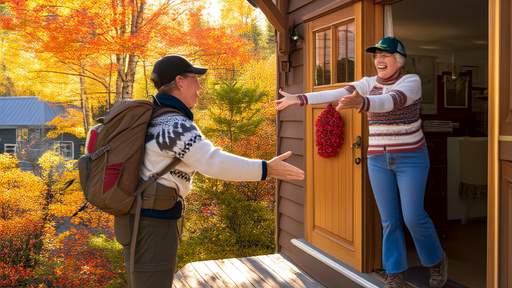
In the picturesque Eastern Townships of southern Quebec, where rolling hills and vineyards paint a serene landscape, a heartfelt message is being sent to American travelers: you are more than welcome here. On May 26, the region’s tourist board released a promotional video that has captured the attention of many. The video features an English-speaking tourist who hesitantly admits to being American, only to receive a warm hug from a French-speaking hotel receptionist. This simple yet powerful gesture is part of a CA$150,000 (US$109,000) ad campaign timed perfectly for the start of the summer travel season, aimed at reassuring US vacationers that they are not only expected but truly embraced.
Travel

Spain's Housing Crisis: The Battle Between Tourism and Livability

By Samuel Cooper/Jun 4, 2025

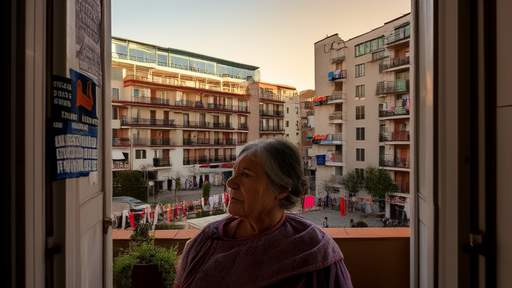
Spain, with its enviable climate, delectable cuisine, and stunning architecture, has long been a magnet for travelers. In 2024, it welcomed a staggering 98 million visitors, making it the world’s second most-visited country after France. However, this surge in tourism has brought with it an unenviable side effect: a severe housing rental crisis in Spain’s main urban centers. Cities like Madrid, Barcelona, and Valencia are now grappling with skyrocketing rents and a shortage of affordable housing, issues that have become a primary concern for Spaniards, according to the Spanish Center for Sociological Research.
Travel

Athens Under Siege: The Battle Against Heat and the Future of Tourism

By Grace Cox/Jun 4, 2025

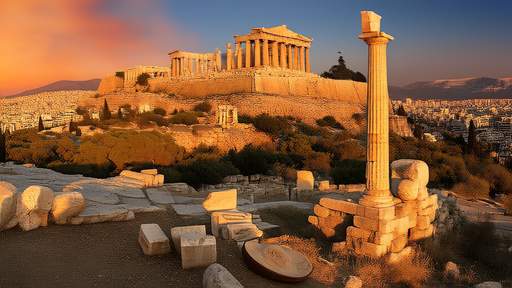
Climbing to the top of the Acropolis of Athens, the birthplace of democracy, has always been a feat for the brave. Never more so, perhaps, than in recent summers when the city has sweated through long and perilous heatwaves. In the past two years, during peak tourism season, relentless heat has repeatedly forced authorities to shut Greece’s most-visited site during the hottest hours of the day to protect visitors and staff from temperatures exceeding 40 Celsius (104 Fahrenheit). The UNESCO World Heritage site has little shade. Standing among the exquisitely-crafted white marble columns of the Parthenon as they reflect the fierce Mediterranean sun can feel more like an endurance test than the fulfillment of a childhood dream — especially when the smoke from out-of-control wildfires drifts across the horizon.
Travel

The Hidden Cost of Flying Solo: A New Frontier in Air Travel Pricing

By David Anderson/Jun 4, 2025

Traveling alone has long been a rite of passage for many adventurers, offering the freedom to explore at one's own pace and the opportunity for self-discovery. However, solo travelers have historically faced a significant financial hurdle: the dreaded "single supplement" often imposed by tour operators. This additional fee, meant to cover the costs of unused space, has long been a source of frustration for those who prefer to journey solo. Surprisingly, this practice now appears to be extending to the skies, with major US airlines reportedly charging higher fares for solo flyers on certain domestic routes. This revelation has sparked a debate about fairness, transparency, and the future of air travel pricing.
Travel

The Castro: A Legacy of Pride and Progress

By Jessica Lee/Jun 4, 2025

In the tapestry of American history, few neighborhoods have woven themselves as indelibly into the cultural fabric as San Francisco's Castro District. Once a quiet enclave known as Eureka Valley or Little Scandinavia, the Castro has transformed over the decades into a global beacon for the LGBTQ+ community. It is a place where identity finds expression, where activism ignites change, and where the spirit of inclusivity thrives. From its humble beginnings to its current status as a symbol of queer culture, the Castro's journey is a testament to the power of community and resilience.
Travel

The Golden Summer of Last-Minute Travel Deals: A Procrastinator's Paradise

By Emma Thompson/Jun 4, 2025

For many, the thrill of summer travel is often overshadowed by the anxiety of booking flights. The fear of missing out on the perfect deal or being stuck with exorbitant prices can turn the planning process into a stressful ordeal. However, this year, the tables have turned in favor of the procrastinators. If you're still contemplating whether to press the "purchase" button for your summer vacation, fear not. This summer is shaping up to be a unique opportunity for those who prefer to plan at the eleventh hour.
Travel

The Enigma of Japan's Trash Cans: A Tale of Culture, Cleanliness, and Caution

By Grace Cox/Jun 4, 2025

In the bustling streets of Tokyo, where neon lights flicker and ancient traditions blend seamlessly with modernity, one might expect to find the usual urban clutter: discarded wrappers, overflowing trash cans, and the general detritus of daily life. Yet, Japan stands as a remarkable anomaly in this regard. Its cities are almost eerily clean, with streets that gleam and public spaces that are virtually free of litter. But herein lies a paradox: despite its reputation for impeccable cleanliness, Japan is surprisingly devoid of public trash cans. This peculiar phenomenon has left many visitors, particularly Western travelers, scratching their heads in confusion.